
The outermost layer of skin works like a wall of brick and mortar. Overtreating it causes mechanical damage.
When skin tightens after washing, stings under products it tolerated a month earlier and reddens across the cheeks with no rash to explain it, the usual cause is not a new allergy. It is a damaged skin barrier.
Dermatologists see it most often in people who have escalated their routines: more exfoliation, stronger actives, more frequent cleansing. The damage is mechanical and largely self inflicted.
A wall of brick and mortar
The barrier in question is the stratum corneum, the outermost layer of skin and thinner than a sheet of paper. It is built like a wall.
Flattened dead cells form the bricks, a mixture of fats forms the mortar, chiefly ceramides, with cholesterol and free fatty acids. Ceramides alone make up around half of that lipid content. The structure does two jobs, holding water in and keeping irritants out.
A slightly acidic film covers the surface, the acid mantle, measured at a pH of roughly 4.7 to 5.5. That acidity regulates the skin’s microbes and keeps the enzymes that maintain the barrier active.
Alkaline soaps raise the pH and blunt those enzymes. The effect of one wash is negligible. Repeated daily, it is not.
Barrier damage rarely traces to a single product, it accumulates: acid exfoliants used too often, retinoids started too strong, hot water, abrasive cleansing, compounded by cold air and dry indoor heat.
Researchers quantify the result as transepidermal water loss, the rate at which water escapes through the skin. A rising figure indicates a barrier that no longer seals.
The clinical signs are undramatic, which is why they are missed. Tightness after washing. Familiar products that begin to sting. Redness, fine flaking, rough patches. In some cases the weakened skin overreacts and breaks out.


What actually helps
Advertising conflates two layers that belong apart. The barrier sits at the surface. Collagen sits well below it, in the dermis, and governs firmness rather than protection.
A damaged barrier is an acute problem that appears within days and resolves within weeks. Collagen loss is a chronic process measured in years. A cream listing collagen as an active ingredient addresses neither, because the collagen molecule is too large to pass the stratum corneum. It remains on the surface and binds a little water.
Treatment is mostly subtraction. Exfoliants and strong actives are paused until the tightness and stinging stop, typically one to two weeks. Cleansing switches to a mild, non alkaline product.
A moisturizer supplying ceramides, cholesterol and fatty acids replaces the lipids that have been stripped. The stratum corneum regenerates on its own, turning over roughly every four weeks, provided it is left undisturbed.
Oral supplementation operates on the deeper layer, not the barrier. The dermis produces collagen through its fibroblasts, which require both amino acid building blocks and biochemical signals. Small collagen peptides supply both.
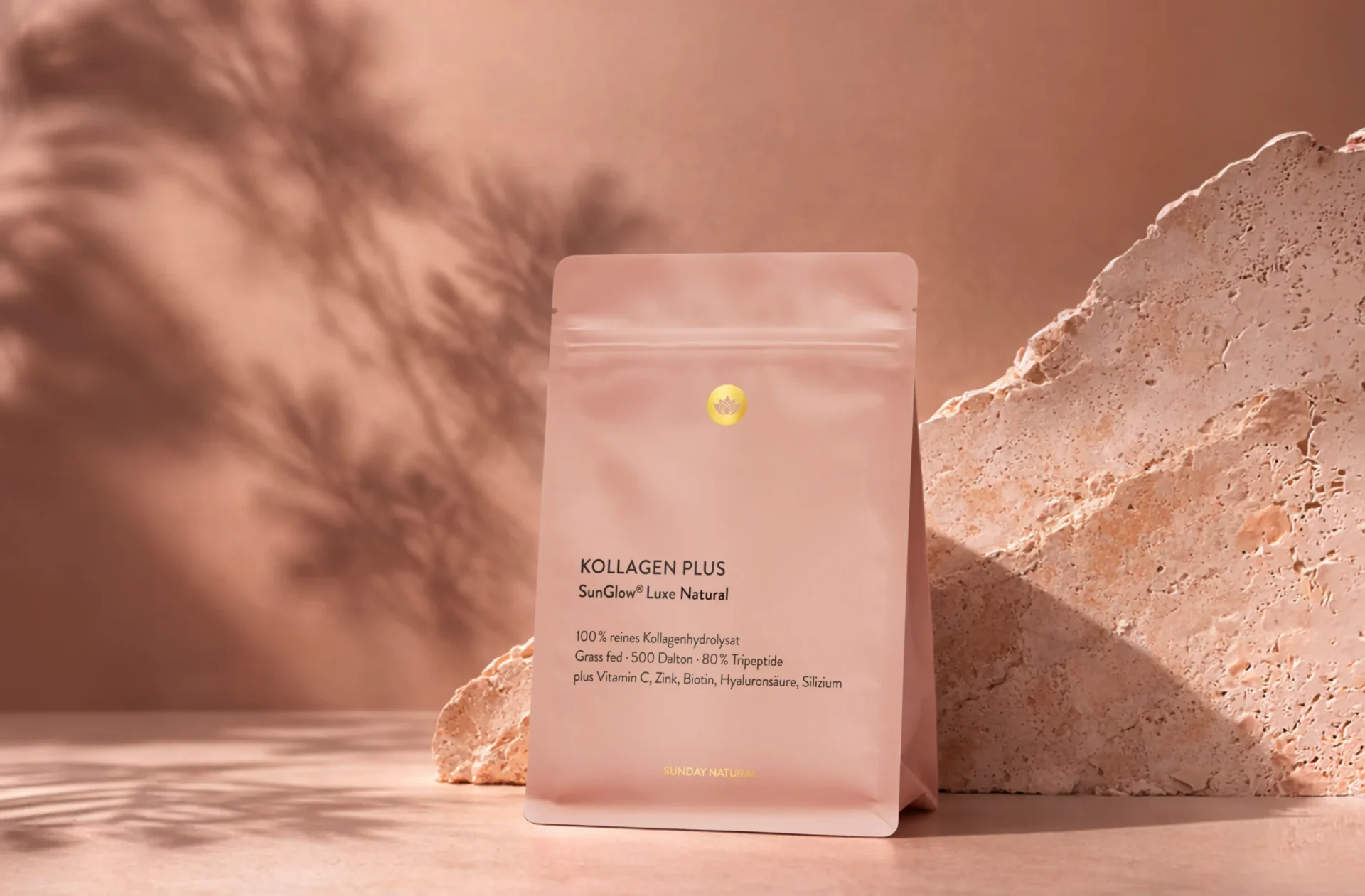
Sunday Natural, among others, markets short fragments called tripeptides on the argument that the body reads them as a prompt to synthesize its own collagen; the company sets out the underlying claims. This has no direct effect on barrier repair, which remains a question of lipids and restraint.
The barrier regulates itself when it is left to. The more common failure in contemporary skincare is not neglect but overtreatment.